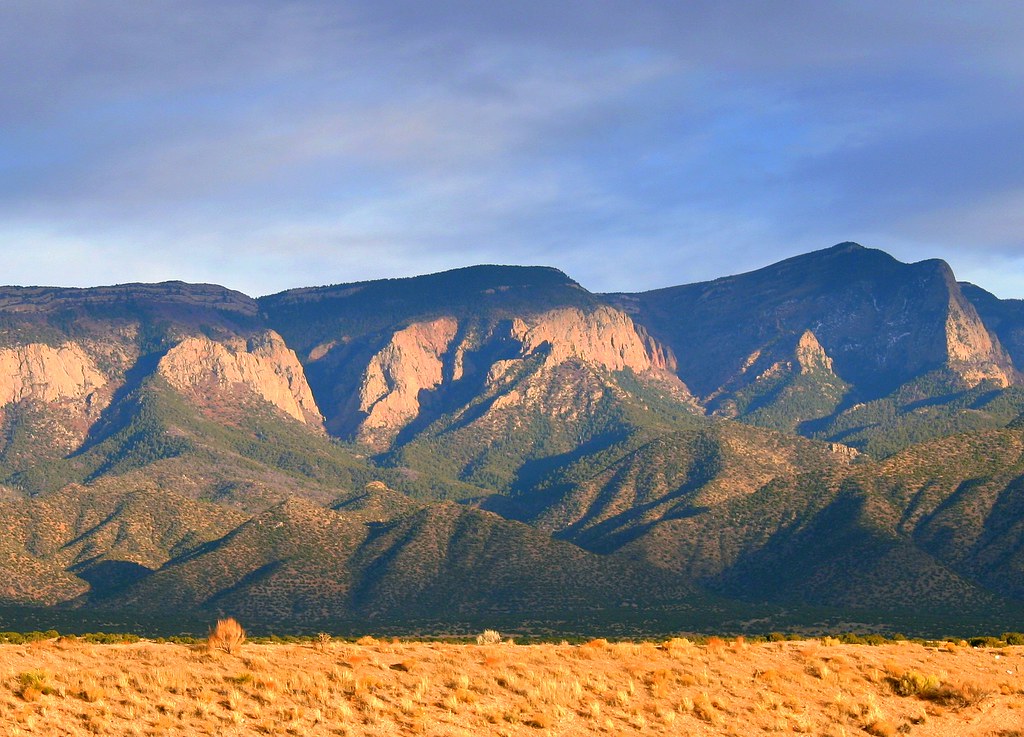
Placitas sits at the edge of two worlds. The Sandia Mountains rise to the east, the Rio Grande basin drops away to the west, and the community itself spans elevations from roughly 5,600 to over 7,200 feet depending on where your property sits. That range matters enormously if you are keeping horses here - the climate shifts with every hundred feet of elevation, not just for temperature but for UV intensity, water consumption, and how hard your horses will work on any given trail ride. This guide addresses what happens after you buy a horse property in Placitas: the daily logistics, the hidden costs, the biological realities, and the unique challenge of sharing a landscape with a free-roaming horse herd that your neighbors did not invite and your fencing may not stop.
Water First: The Infrastructure That Everything Else Depends On
Before you think about hay, vet bills, or tack rooms, think about water. A horse at rest typically requires roughly 5 to 10 gallons of water per day depending on body weight, and that figure climbs sharply when summer temperatures rise or when you start riding. On a Placitas parcel without municipal water service, that demand falls entirely on a private well - and not every well is permitted for livestock use.
New Mexico water law is strict and actively enforced. A combined domestic-and-livestock well permit is the relevant permit category, and the Office of the State Engineer (OSE) issues and tracks these permits. The permit defines both the allowable uses and an annual withdrawal cap. The cap matters, because the year-round water demands of two or three horses can push a household toward that ceiling in a dry year. Before purchasing any property, request the well permit documents from the seller and confirm the permitted use category with OSE directly - they can tell you the current withdrawal limits, which are regulatory figures that can be updated and should be verified at the source.
Every well in this category must be equipped with a totalizing flow meter under New Mexico administrative code. If a property you are evaluating lacks a meter, that is a compliance problem you will inherit, not a paperwork inconvenience. OSE inspects and enforces metering requirements, and violations can affect water rights.
Why Automatic Waterers Pay for Themselves
Manual water management works until a summer afternoon when temperatures spike or a January night when pipes freeze. At Placitas elevations above 6,000 feet, both scenarios happen on a regular schedule. Automatic float-valve waterers plumbed to a pressure tank maintain the daily minimum without relying on human vigilance, and they prevent the winter scenario where an owner finds a frozen trough at morning feeding. NMSU Extension recommends them as best practice for New Mexico properties. The upfront plumbing cost is real; the alternative - hand-filling through a heat emergency or a hard freeze - is worse, and a horse without water overnight in winter is a colic risk.
Feed and Forage Reality: You Are Buying Every Calorie
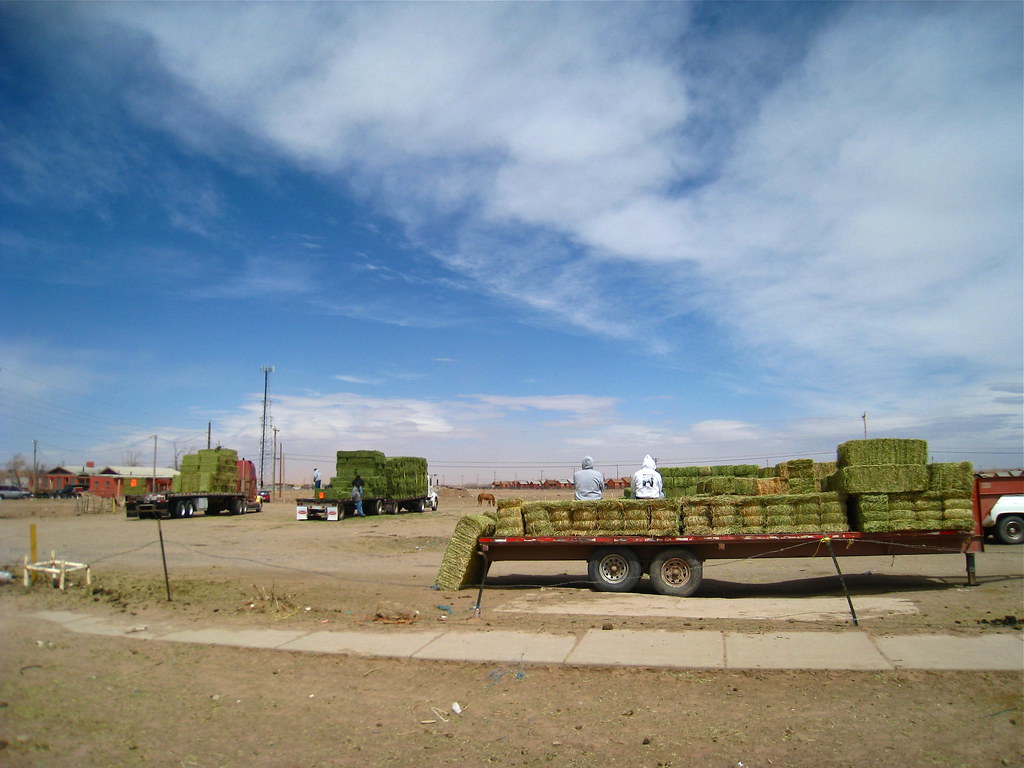
There is a number that reframes the entire economics of keeping horses on a small desert parcel: in the arid Southwest, a single horse may need up to 200 acres of rangeland to sustain itself on natural forage alone. A typical Placitas lot of one to five acres provides essentially zero grazing. The native vegetation is sparse, adapted to protect itself from overgrazing, and largely unsuitable as a primary feed source. You are not supplementing forage here - you are replacing it entirely with purchased hay.
Alfalfa is the dominant horse hay in New Mexico, and for practical reasons. NMSU research confirms it outperforms other legumes in New Mexico irrigated growing conditions, and it delivers the protein and caloric density horses need when they cannot graze. Prices fluctuate seasonally and by region; USDA Agricultural Marketing Service publishes regular market reports with current New Mexico hay prices, and checking those figures before you buy a property - and before each major hay purchase - is worth the five minutes. Budget conservatively, because hay is not optional and supply can tighten in drought years.
Hay Storage in an Arid Climate
Placitas's low humidity is an asset for hay storage - mold is less of a concern than in wetter regions. The actual risks are UV degradation and wind. Hay stacked in open sun loses nutritional value faster than hay stored in a covered structure, and afternoon winds at higher elevations can scatter loose material or dislodge bales. A roofed hay barn is not a luxury; it protects a feed investment that, for a two-horse operation, is substantial across a full year.
For owners willing to irrigate a small paddock area, warm-season grasses such as Bermuda grass and teff use water more efficiently than many cool-season alternatives under New Mexico conditions, according to NMSU forage research. This will not replace purchased hay as the primary feed source given typical parcel sizes, but it creates a "sacrificial" turnout strip that gives horses something to pick at and keeps dust down in high-traffic areas. Check NMSU Extension's irrigated pasture publications for current variety and water-use guidance specific to your elevation.
Managing Heat and UV at Altitude
High-desert heat is different from lowland heat. At 6,000 feet, the thinner atmosphere filters less UV radiation - the UV index at Placitas routinely peaks in the extreme range on summer afternoons, measurably above what an equivalent-temperature day in Albuquerque would produce. Horses with pink or unpigmented skin on their muzzles and lower legs are vulnerable to sunburn and long-term UV damage. Equine-formulated sunscreen, or a zinc-oxide-based human sunscreen approved by your veterinarian, can be applied to those areas - consult your vet before using any human product, as some ingredients are unsafe for horses.
Reading Heat Stress Before It Becomes an Emergency
NMSU Guide B-711 gives owners specific physiological thresholds rather than vague "watch for distress" advice. A horse's normal resting respiratory rate is 8-16 breaths per minute; above 40-50 requires immediate attention. Normal resting heart rate runs 36-44 beats per minute; at or above 80, call a vet. Rectal temperature above 103 degrees Fahrenheit is a veterinary emergency. In a rural setting where a large-animal vet may be 30-45 minutes away, a horse that crosses these thresholds needs intervention now.
- Schedule all rides before 9 a.m. or after 5 p.m. from June through September
- Provide shade structures with enough overhang to cover the full body of each horse - not just a corner of the pen
- Offer water before, during, and after exercise - not only at the end
- When giving electrolyte supplements, always provide free-choice fresh water immediately after; withholding water following electrolytes worsens dehydration, a common mistake on desert properties where water is manually managed
Anhidrosis: Screen Before You Move
Anhidrosis is the failure of a horse's sweat mechanism - a documented condition in horses kept in hot climates. An anhidrotic horse cannot regulate body temperature through sweating, making it acutely vulnerable to hyperthermia even on days that seem manageable. If you are relocating a horse from a cooler or more humid region, screen for this condition before the move. A horse that sweated normally in Colorado may not adapt to New Mexico conditions the same way. Ask your vet to evaluate sweat response before shipping.
Fencing and Shelter Design for the Desert
UV exposure degrades plastic and rubber fencing components faster at altitude than manufacturer specifications - often written for temperate regions - would suggest. Wooden posts dry and crack faster than in humid climates. Whatever system you choose, plan for more frequent inspection and replacement cycles. Metal pipe or treated lumber with UV-stabilized rail systems hold up better over time.
Evaluating a Placitas property's fencing requires checking for more than just perimeter integrity. The specific design requirement here - one that distinguishes this community from most other horse-property markets in New Mexico - is the need to keep your horses fully separated from the free-roaming local herd. A fence that would hold a barn horse on a calm day may not hold if a wild stallion is pressing against it from the outside. Plan for that scenario from the start, and look for:
- Perimeter posts set deep enough to resist lateral pressure, not just animal pushback from inside
- No gaps or soft spots along fence lines bordering open desert or undeveloped land
- Gate latches that a horse rubbing against the outside cannot work open
- A separate inner pen or secure enclosure where you can move your horses quickly if the perimeter is breached
The Wild Horses of Placitas
The free-roaming horse population in and around Placitas has varied considerably over time; recent surveys documented well over 150 horses, though ongoing fertility control and removal efforts have reduced the count roaming at large. For the current population figure, check directly with Placitas Wild or Sandoval County, as the number changes. The herd is managed under a formal program: Sandoval County contracted with Mt. Taylor Mustangs to administer a PZP fertility-control program - PZP being porcine zona pellucida, a vaccine that limits reproduction without harming the animals. The advocacy organization Placitas Wild tracks and monitors the herd. Sandoval County's 2021 Herd Management Working Draft formalized management protocols, and legislators revisited the challenges of this herd as recently as March 2025, which signals that the situation is active and unlikely to resolve quietly on its own.
For a horse property owner, this creates two distinct problems that no buyer's guide currently addresses. First, biosecurity: wild-ranging horses carry disease exposure risk at the fence line. Respiratory illness, equine influenza, and strangles can pass between horses through a fence. Your horses must be current on core vaccinations before arriving in Placitas - this is standard practice anywhere, but proximity to a free-roaming herd makes it non-negotiable. Second, injury and escape: a stallion from the wild herd approaching your mares will test your fencing in ways a domesticated horse never will. Two horses meeting at an inadequate barrier can both be seriously injured.
If wild horses breach your perimeter, move your horses to a secure enclosure first, then contact Placitas Wild and Sandoval County Animal Control. Do not attempt to drive the wild horses out using a vehicle or aggressive action - this can injure the animals and escalate the encounter. The county has handling protocols and organizational contacts for exactly this scenario. Property fencing is entirely the owner's responsibility; no program or county contract provides reimbursement for fence-line injuries caused by the wild herd.
Seasonal Care Calendar
Placitas's elevation moderates the extremes compared to Albuquerque and the lower Rio Grande valley - summers are cooler, winters are colder - but each season carries specific management demands.
Spring brings high-wind events that can push 40-50 mph on exposed ridges from March through May. Loose material in pens becomes airborne debris. Check fence hardware, tighten loose gates, and make sure hay storage covers are secured before the season starts. Fly populations emerge aggressively with warmer soil temperatures; begin fly control programs before you think you need them.
Summer heat and UV protocols run from June through mid-September. The North American Monsoon brings afternoon thunderstorms from roughly July through early September, which cools temperatures but creates mud in pens and increases footing risk near stall entries. Grade paddocks to drain away from structures.
Fall temperatures drop quickly after Labor Day at Placitas elevations. The transition from summer to winter coat is a good window for dental work, wellness exams, and confirming your farrier schedule. Build hay inventory before seasonal demand drives prices up.
Winter above 6,000 feet means hard freezes from November through March. Uninsulated pipe runs to waterers will freeze. Trace heating on exposed pipe sections is not optional in the more exposed parts of any property at this elevation. Stock tank heaters are a backup, not a primary solution - they fail, and they do not protect the supply line.
Veterinary and Farrier Logistics in Rural Sandoval County
Finding a large-animal vet who makes farm calls to Placitas requires early effort. The rural nature of Sandoval County limits the number of practices that serve the area, and the ones that do often have long schedules for non-emergency visits. Establish a relationship before you need one urgently - before you move horses in, if possible. Ask specifically about emergency availability and after-hours protocols. Colic and heat stress do not wait for office hours, and a 30-45 minute vet response time in a rural area changes how you need to manage early symptoms.
Farriers face similar supply-and-demand dynamics in a low-density equestrian community. Get on a regular six-to-eight-week trimming cycle and protect that appointment. Canceling last-minute in a rural market can cost you your slot entirely. High-desert ground - particularly the decomposed granite and rocky soil common in Placitas - is hard on hooves; horses that would go barefoot in softer terrain may need shoes or protective boots here.
Why Purpose-Built Infrastructure Makes the Difference
Every constraint described above has a property-infrastructure solution. The difference between a property with a properly permitted livestock well, plumbed automatic waterers, covered stalls, a roofed hay barn, solid perimeter fencing, and adequate shade and a property that lacks these things is not a matter of convenience - it is a matter of whether keeping horses here is actually workable day to day.
Properties along the northern edge of Placitas near the Sandia Mountain boundary carry an additional asset: direct access to Cibola National Forest trails through the Placitas Trail System. These are designated National Forest System trails that permit horses. That access converts the high-desert setting from a logistics challenge into a genuine riding destination - a place where an owner can leave the property and connect immediately to mountain singletrack on horseback, without hauling. No boarding facility offers that.
When evaluating a Placitas property for horses, the checklist is not the same as for properties in the East Mountains or the Estancia Valley. Get the water system, shelter, fencing, and hay storage right, and Placitas is a demanding but genuinely rewarding place to keep horses.
Frequently Asked Questions
Can I graze horses on a typical Placitas lot?
Not in any meaningful way. Southwest desert rangeland requires up to 200 acres to support a single horse on natural forage, and most Placitas parcels run from one to five acres. You will need to purchase all hay - factor that cost into your budget before buying the property, not after.
Do I need a special well permit to water horses in Placitas?
Yes. New Mexico requires a combined domestic-and-livestock well permit for wells used to water horses, and those wells must be equipped with a totalizing flow meter under state administrative code. The Office of the State Engineer issues these permits and publishes current requirements, including the annual withdrawal cap that applies to your permit category - verify those limits directly with OSE before closing on any property.
What should I do if wild horses get onto my property?
Move your horses to a secure enclosure first, then contact Placitas Wild and Sandoval County Animal Control. Do not attempt to chase or drive wild horses out with a vehicle - this can injure them and escalate the encounter. The county has protocols and organizational contacts established for exactly this situation.
How do I know if my horse is overheating at altitude?
Use the NMSU Guide B-711 thresholds as your benchmark: respiratory rate above 40-50 breaths per minute, heart rate at or above 80 beats per minute, or rectal temperature above 103 degrees Fahrenheit each require immediate veterinary contact. At Placitas's distance from large-animal emergency care, acting on early signs matters - do not wait to see if the horse improves on its own.
What vaccinations do horses need before moving to Placitas?
Core AAEP-recommended vaccines apply - Eastern and Western encephalomyelitis, tetanus, West Nile virus, and rabies. Given the proximity of the free-roaming Placitas herd, your vet should also evaluate equine influenza and rhinopneumonitis coverage before and after the move. Tailor the protocol to your horses' history and the specific regional disease exposure with a large-animal vet who knows the area.
Is it hard to find emergency large-animal veterinary care near Placitas?
More difficult than in an urban market, yes. Large-animal practices that make farm calls to rural Sandoval County are limited, and emergency response times can run 30-45 minutes or more depending on where your vet is based. Establish a primary vet relationship and confirm their after-hours protocol before your horses arrive, and identify a backup option in case your primary practice is unavailable during a crisis.